
Foundation Repair in Wisconsin & the U.P.: Your Top Questions Answered
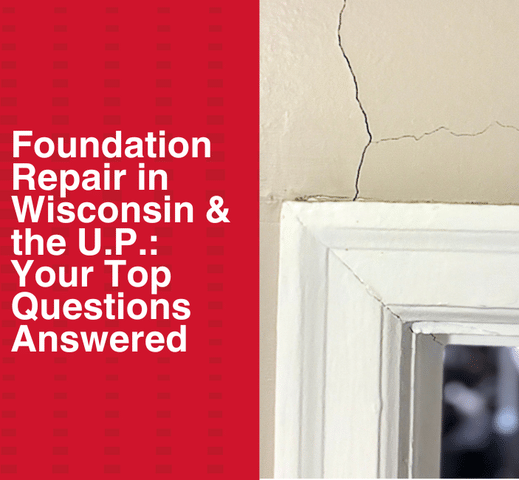
Homeowners in Wisconsin and the U.P. often face unique foundation and structural challenges due to seasonal weather, soil conditions, and moisture — and it’s not always easy to know when a problem is serious or what solutions are best. We asked what homeowners are most concerned about — from cracked walls to basement leaks — and put together this helpful guide to answer the questions we hear most.
Whether you’re dealing with foundation cracks, water in the basement, or crawl space issues, this guide will help you understand the problem and the best next steps.
1. What Are the Most Common Signs of Foundation Problems?
Knowing the early signs of foundation issues can save you thousands in future repairs. Look out for:
• Cracks in foundation walls or floors — horizontal, stair-step, or widening cracks can signal a structural issue.
• Doors or windows that stick or don’t close properly — shifting foundations cause frames to become misaligned.
• Uneven or sagging floors — soil movement beneath your home can lead to settling or structural stress.
• Gaps around trim or ceilings — shrink-swell soil and hydrostatic pressure can cause movement.
These symptoms often appear gradually and homeowners may not notice them until they worsen, so early inspection is key.
2. What Causes Foundation Problems in Wisconsin & the U.P.?
Several factors unique to our region contribute to foundation stress:
• Hydrostatic Pressure & Soil Moisture
Heavy rains, snowmelt, and poor drainage can saturate soil around your foundation, pushing against walls and causing cracks or movement.
• Freeze-Thaw Cycles
Winter freeze and spring thaw cycles cause the soil to expand and contract, applying repeated pressure against foundations.
• Clay Soil Shrink-Swell
Clay soils common in Wisconsin expand when wet and shrink when dry — leading to shifting soil that stresses home foundations.
3. Is Moisture Causing My Foundation Problems?
Water is often the main culprit behind foundation issues:
• Basement dampness or leaks indicates a moisture problem that can cause foundation stress.
• Mold or musty smell — moisture encourages mold growth in basements or crawl spaces, affecting indoor air quality.
• Standing water around the home’s perimeter — poor drainage leads to water pushing against foundation walls.
If your home is experiencing moisture buildup, you may need foundation waterproofing, drain systems, or crawl space encapsulation.
4. When Should I Call a Foundation Repair Specialist?
You should schedule a professional inspection if you notice any of the following:
• Cracks that widen over time
• Water in the basement or crawl space after rainfall
• Doors and windows that stick year-round
• Sagging floors or uneven rooms
A free, no-obligation inspection will identify whether you need a simple fix or a long-term solution.
5. What Solutions Are Available for Foundation Repair?
Professional foundation repair focuses on fixing both the symptoms and the root causes of damage. Common solutions include:
• Foundation Crack Repair
Specialized techniques to stabilize and seal cracks before they worsen.
• Wall Anchors & Reinforcement
Used to stop bowing walls and restore straightness.
• Piering
Supports to stabilize a settling foundation and prevent further movement.
• Waterproofing & Drainage Systems
Interior or exterior systems to direct water away from your foundation and keep basements dry.
• Crawl Space Solutions
Encapsulation, vapor barriers, and dehumidification help protect crawl spaces from moisture and structural decay.
6. Do Insurance Policies Cover Foundation Repair?
Homeowners insurance typically doesn’t cover foundation issues caused by gradual soil movement, settlement, or moisture unless they’re the result of a sudden, unexpected event. Reviewing your policy with your agent can clarify coverage for structural claims.
7. How Long Does Foundation Repair Take?
The timeline depends on the extent of the problem and chosen solution, but many foundation repair jobs, including piering or wall reinforcement, can often be completed in one to five days — with minimal disruption to your daily life.
8. How Can I Prevent Future Foundation Problems?
To protect your home long-term:
• Ensure proper grading so water flows away from your foundation
• Maintain gutters and downspouts
• Add drainage systems if needed
• Address moisture issues in basements and crawl spaces quickly
Proactive maintenance protects your investment and keeps your home stable and safe.
Still have questions about foundation repair in Wisconsin or the U.P.? Contact Sure-Dry today for a free inspection and personalized solutions tailored to your home’s needs.
Melissa Robenhorst brings over 25 years of marketing experience and specialized knowledge in foundation repair, crawl space encapsulation, waterproofing, concrete leveling, and egress window installation.

