
The Truth About Winter Salt and Your Concrete
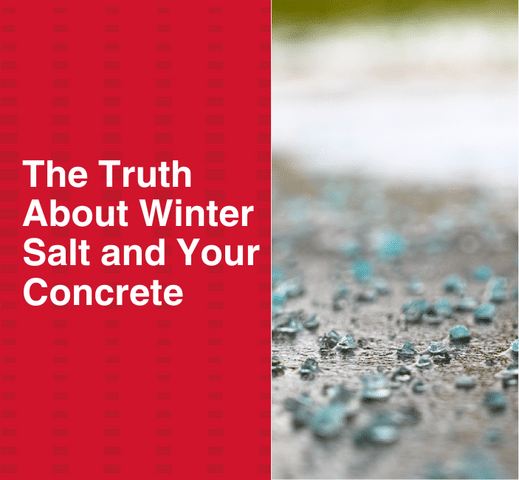
When winter weather brings snow and ice, most homeowners reach for salt or chemical ice-melt to make driveways, sidewalks, and steps safer. It works—but over time, it can also take a toll on your concrete.
Understanding why that happens can help you protect your concrete and extend its life.
Concrete Is Strong—but It’s Also Porous
Concrete may look solid, but it behaves more like a very dense sponge. Tiny pores run throughout the surface, allowing water to soak in—especially during winter when snow and ice sit on it for long periods.
That’s where salt and ice melt come into play.
How Salt Affects Concrete
Traditional rock salt (sodium chloride) doesn’t just melt ice—it lowers the freezing point of water. As ice melts, it turns into a salty liquid called brine.
This brine can stay liquid at colder temperatures than plain water, which allows it to soak deeper into concrete’s pores. When temperatures drop again, that brine refreezes inside the concrete. Water expands with great force when it freezes, and over time, that repeated expansion creates internal stress that can break those pores.
So, after enough freeze-thaw cycles, the surface can start to break down, leading to:
- Spalling (a fancy industry term for chipping or pitting)
- Flaking or scaling
- Cracks
- Rough, uneven areas
The damage often builds slowly, becoming more noticeable after several winters have passed.
What About Chemical Ice Melt?
Many homeowners switch to chemical ice melts thinking they’re automatically safer than salt. The truth is—it depends on the product and how it’s used.
Most chemical ice melts (such as calcium chloride or magnesium chloride) also work by creating a brine. The difference is that they can melt ice at much lower temperatures than traditional salt, which makes them effective in extreme cold.
However, because they create brine that stays liquid longer and penetrates more deeply, they can also contribute to freeze-thaw damage if overapplied. And that’s not all. Some chemical ice melts are also more hygroscopic, meaning they actively attract moisture, which increases how much liquid gets pulled into the concrete, potentially making the situation worse.
What You Can Do About It
One of the best ways to protect concrete from winter damage is sealing the surface with something like SealantPro®.
A quality, professionally applied concrete sealer acts like a raincoat for your concrete, limiting how much water and brine can soak into those tiny pores, reducing the internal freeze-thaw stress that leads to cracking and spalling. And a sealer that actually bonds to concrete, like SealantPro, rather than just sitting on its surface, is like a raincoat you never take off.
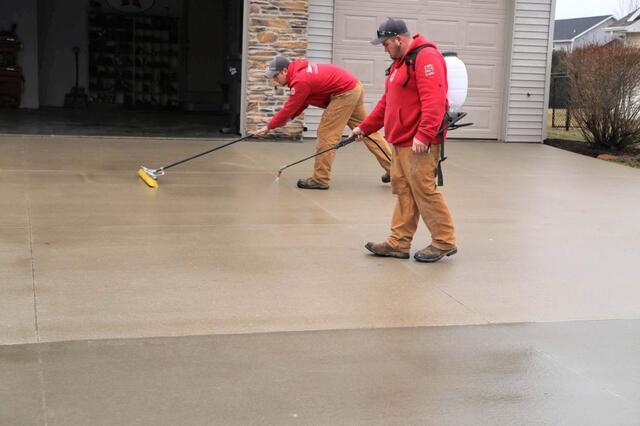
Sealing your concrete can:
- Reduce moisture and salt absorption
- Slow surface deterioration
- Extend the life of driveways, sidewalks, and patios
- Help concrete maintain a cleaner, more uniform appearance
While sealing won’t stop winter weather from happening, it adds a strong layer of protection where concrete is most vulnerable—right at the surface—protecting your home’s curb appeal season after season.
The Takeaway for Homeowners
Salt and ice melt are often necessary for winter safety, but they can have unintended effects on concrete over time. Because concrete absorbs moisture, repeated exposure to brine and freeze-thaw cycles can gradually weaken the surface.
Using ice melt thoughtfully—and protecting concrete with proper sealing—can go a long way toward preventing costly repairs down the road.
For more information about SealantPro or other concrete repairs, or to schedule your free estimate, click here!
Melissa Robenhorst brings over 25 years of marketing experience and specialized knowledge in foundation repair, crawl space encapsulation, waterproofing, concrete leveling, and egress window installation.

